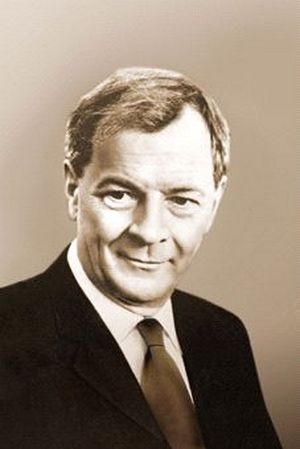
Lev Artsimovich
 2026-01-21 09:30:42
Lev Artsimovich (Moscow, Russian Empire, February 25, 1909 – March 1, 1973, Moscow, USSR) was a Soviet physicist, permanent leader of research on the physics of high-temperature plasma and the problem of controlled thermonuclear fusion (1951), academician of the Academy of Sciences of the USSR (1953), Hero of Socialist Labor (1969). Together with A.I. Alikhanov carried out a number of studies on the physics of X-rays, of which the most interesting was an experimental study of the reflection of X-rays from thin layers of metals at very small angles. He studied the processes of interaction of fast electrons with matter, obtained data on the dependence of the intensity of bremsstrahlung radiation and total energy losses on the energy of fast electrons, which confirmed the conclusions and predictions of quantum theory, which at that time was of fundamental importance. When LFTI began to develop research on the physics of the atomic nucleus (1933), Artsimovich was one of the first to switch to a new direction. Together with Kurchatov, he studied the patterns of absorption of slow neutrons by the nuclei of various substances (1934-1941). Together with A.I. Alikhanov and A.I. Alikhanyan proved the conservation of momentum during the annihilation of an electron and a positron (1936). Under the leadership of Artsimovich, for the first time in the USSR, an electromagnetic method for separating isotopes was developed, and for the first time in the world, a thermonuclear reaction was carried out in laboratory conditions. Lev Andreyevich Artsimovich was a Soviet physicist who created the basis of the tokamak - a device capable of holding ultra-high-temperature plasma, suitable for research in the field of controlled nuclear fusion. He was the chairman of the Euratom Advisory Committee on Thermonuclear Fusion.